



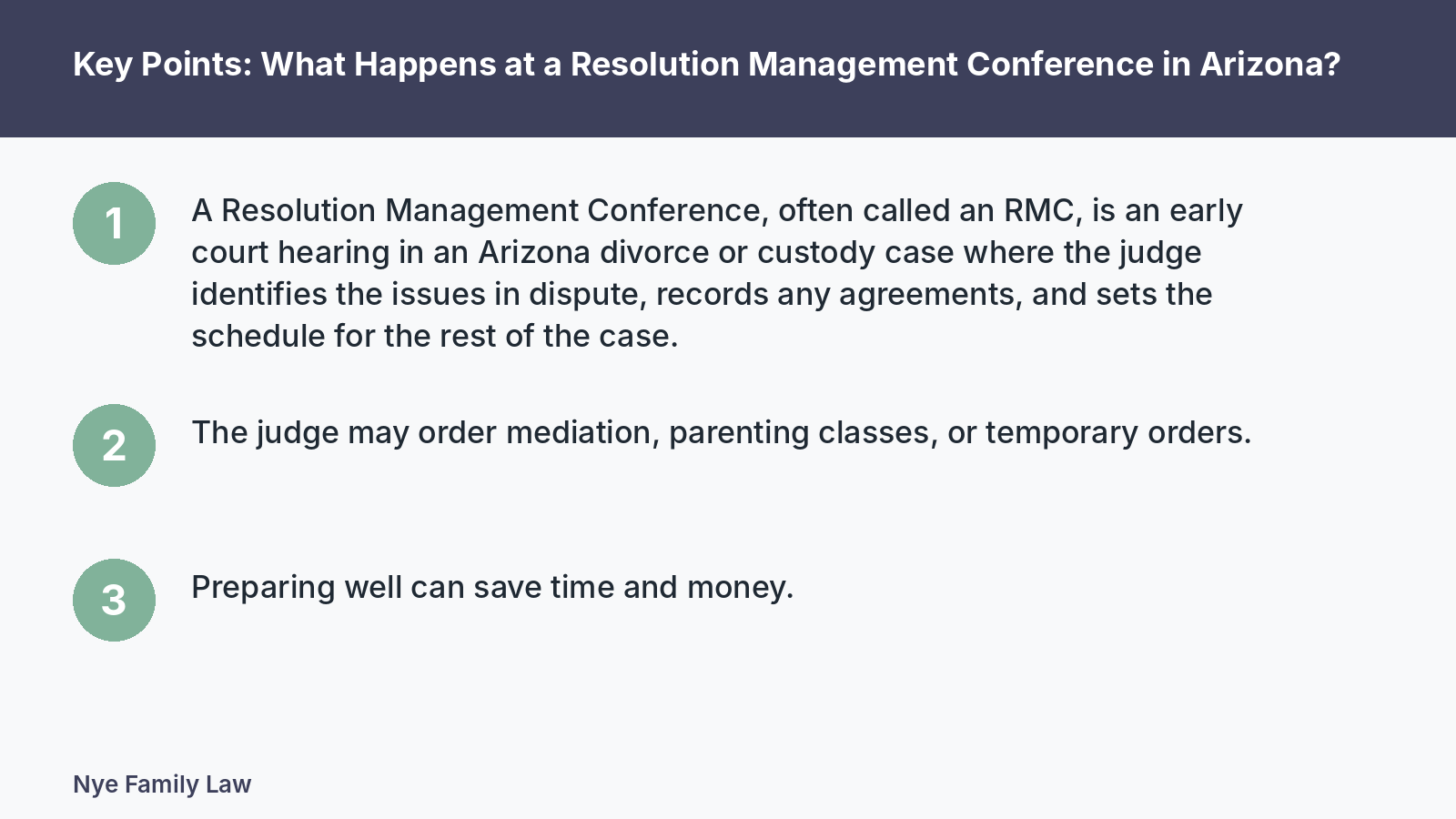
A Resolution Management Conference, often called an RMC, is an early court hearing in an Arizona divorce or custody case where the judge identifies the issues in dispute, records any agreements, and sets the schedule for the rest of the case. The judge may order mediation, parenting classes, or temporary orders. Preparing well can save time and money.
Reviewed by Dexton H. Nye, attorney at Nye Family Law. Last reviewed November 2026.
For many people going through a divorce or custody case in Mesa and the East Valley, the Resolution Management Conference is their first appearance before a judge. It is usually short and less formal than a trial, but it plays an important role in shaping how the case moves forward.
Here is what to expect and how to prepare.
Understanding the RMC in advance helps you walk in calm, organized, and ready to protect your interests.
When the RMC Happens
In Maricopa County, the court typically sets a Resolution Management Conference after the respondent files a response. If the parties have already reached a full agreement, the case may move toward a consent decree instead. The notice of hearing tells you the date, time, and whether the hearing will be in person or virtual.
The Purpose of the Conference
- Identify which issues are agreed and which are disputed
- Put any agreements on the record
- Discuss temporary orders, such as parenting time or support
- Order mediation or other dispute resolution services
- Set deadlines for disclosure and discovery
- Schedule a trial or further hearings
The RMC is about organizing the case, not deciding it. The judge usually does not hear full testimony.
Documents to Prepare
Courts often require each party to file a Resolution Management Statement or similar document before the conference. Parties may also need to exchange or file an Affidavit of Financial Information. Gather pay stubs, tax returns, bank statements, debt information, and details about children’s schedules and expenses. Arriving organized helps the judge understand your position.
A simple checklist helps:
- Your Resolution Management Statement, filed and served on time
- Affidavit of Financial Information with recent pay stubs and tax returns
- Bank, retirement, and debt statements
- A list of property and who you propose should keep each item
- The children’s current schedules, school information, and expenses
- Any temporary orders, prior agreements, or protective orders
- A proposed parenting plan if children are involved
Parenting Classes and Mediation
In cases involving children, Arizona courts generally require both parents to complete a parent information program. The court may also refer parents to Conciliation Services for mediation on parenting issues, or to private mediation or a settlement conference for financial issues. Many cases settle through these programs. Learn more about divorce mediation.
Temporary Orders at the RMC
If issues such as temporary parenting time, child support, spousal maintenance, or use of the marital home need attention before trial, the judge may address them at or after the RMC. Sometimes parties agree to temporary terms on the record. If not, the judge may set a separate temporary orders hearing.
What to Expect in the Courtroom
RMCs are often scheduled in short time blocks. The judge will ask each side to summarize the issues. Be respectful, brief, and focused on the main issues. Avoid arguing about past conflicts. If you have an attorney, your lawyer will usually speak for you.
Agreements Reached at the RMC
If you reach agreements before or during the RMC, the judge can make them part of the record, often under Rule 69 of the Arizona Rules of Family Law Procedure. Rule 69 agreements are generally binding, so it is important to understand terms before agreeing. A lawyer can help make sure the agreement is clear and complete.
After the Conference
The court issues an order summarizing the agreements, deadlines, and next steps. Follow every deadline, complete required classes, and attend mediation. Missing deadlines can lead to sanctions or a weaker position at trial. For couples who reach full agreement, an uncontested divorce may follow.
How a Lawyer Can Help
A family law attorney can prepare your Resolution Management Statement, organize financial disclosures, negotiate agreements before the hearing, and represent you. Limited scope representation is also available for parents who want help only with the RMC.
Local Resources for RMC Preparation
Parents and spouses in Maricopa County can use several resources to prepare. The Superior Court’s Law Library Resource Center provides family court forms, instructions, and information about court procedures. Court Conciliation Services offers mediation and information about parenting programs required in cases involving children.
The required parent information program helps parents understand how divorce affects children and how to co-parent. Legal aid organizations and limited scope attorneys can help people who need guidance without full representation.
Using these resources before the RMC can help you arrive organized and focused on the issues the judge needs to address.
Frequently Asked Questions
What is a Resolution Management Conference in Arizona?
An early hearing where the judge identifies issues, records agreements, and sets the case schedule.
Do I need to attend the RMC in person?
Follow the court’s notice. Many RMCs are held virtually, but attendance is required.
Will the judge make final decisions at the RMC?
Usually not. The RMC organizes the case rather than deciding contested issues.
What should I bring to a Resolution Management Conference?
Your Resolution Management Statement, financial documents, and any proposed agreements.
Can we settle our case at the RMC?
Yes. Agreements can be placed on the record and often become binding.
What happens if I miss the RMC?
The court may proceed without you or impose sanctions, so attendance matters.
Is the RMC the same as a trial?
No. It is a short scheduling and case management hearing.
What does legal decision-making mean in Arizona?
It is Arizona’s term for legal custody: the right to make major decisions about a child’s education, health care, religion, and personal care. It can be joint or sole and is separate from parenting time.
Can a Resolution Management Conference be rescheduled?
Sometimes. A party can file a motion to continue, and the court may reschedule for good cause, but you should not assume it will be moved until the court issues a new date.
How should I handle disagreements during an RMC?
Stay calm, speak to the judge rather than your spouse, and stick to the main issues, facts, and documents. If an issue cannot be resolved, ask that it be referred to mediation or set for a later hearing.
Talk to a Mesa Divorce Lawyer
Nye Family Law helps spouses and parents in Mesa and the East Valley prepare for Resolution Management Conferences and every stage after. When you call, our team will ask about your case, the issues in dispute, and your goals, then explain how to prepare for the hearing.