



Arizona allows spouses to represent themselves in a divorce, and the courts provide forms and self-help resources. Self-representation can work for short marriages with few assets and no children. It becomes risky when there are retirement accounts, a home, business interests, or disputed parenting time, and limited-scope help from a lawyer is often worth it.
Reviewed by Dexton H. Nye, attorney at Nye Family Law. Last reviewed November 2026.
Yes. Arizona allows people to represent themselves in a divorce, and many do, especially in Maricopa County where the court provides forms and self-help resources. Self-representation can work when both spouses agree on everything, there are no children or the parenting plan is simple, and the property and debts are straightforward. It becomes risky when there are retirement accounts, a house, a business, spousal maintenance, disputed parenting time, or a spouse who has a lawyer. A middle option, limited scope representation, lets you hire a lawyer for only the parts you need.
People in Mesa, Gilbert, Chandler, and across the East Valley often consider handling their own divorce to save money. That can be a sensible choice in the right case. The key is knowing which parts of a divorce are routine and which can create lasting financial problems if handled incorrectly.
When Self-Representation Can Work
- You and your spouse agree on all issues
- The marriage was short, with few shared assets
- There are no minor children, or you agree on a detailed parenting plan
- No retirement accounts, real estate, or business interests need to be divided
- Neither spouse is requesting spousal maintenance
- There is no history of domestic violence or intimidation
Issues That Commonly Cause Problems
Issue | Why It Is Risky Without Help |
|---|---|
Retirement accounts | Dividing many plans requires a separate court order, and errors can cause taxes or lost benefits |
The family home | Equity, refinancing, and who stays liable on the mortgage must be addressed clearly |
Community debt | Creditors are not bound by your decree, so who pays what must be planned carefully |
Spousal maintenance | Arizona uses guidelines and specific factors, and waiving it is often permanent |
Vague plans lead to future conflict and modification cases | |
Child support | Calculations must follow the Arizona guidelines and current income information |
How the Process Works for Self-Represented Spouses
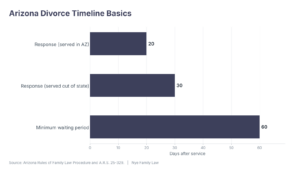
A divorce starts with filing a petition and serving the other spouse. Arizona requires a waiting period of at least 60 days after service before the court can enter a final decree. If both spouses agree on everything, they can submit a consent decree. If the other spouse does not respond, a default process may apply. If spouses disagree, the case moves through disclosure, possibly mediation, and a trial if needed. Self-represented parties must follow the same rules and deadlines as lawyers. Learn more about uncontested divorce in Mesa.
Court Resources for Self-Represented Spouses
The Maricopa County Superior Court offers forms, instructions, and a law library resource center for people handling their own family cases. These resources explain filing steps and court procedures, but court staff cannot give legal advice about your rights or whether an agreement is fair. Using the correct, current forms and following service rules exactly helps avoid delays and rejected filings.

Limited Scope Representation
Arizona permits limited scope representation, sometimes called unbundled services. A lawyer can review your agreement before you sign, prepare a retirement division order, draft a parenting plan, or appear at a single hearing, while you handle the rest. This approach can give you professional protection on the high-stakes parts without paying for full representation.
Mediation as a Middle Ground
Mediation can help spouses reach agreement without a trial. A neutral mediator helps both sides work through property, support, and parenting issues. Many self-represented spouses use mediation and then have a lawyer review the final terms. Learn more about divorce mediation in Mesa.
The Cost of Fixing Mistakes Later
Once a decree is entered, changing property terms is difficult and often impossible. A missed retirement account, an unclear mortgage provision, or a waived spousal maintenance claim can cost far more than early legal advice would have. Parenting plans can be modified, but vague plans often lead to repeated court filings.
Signs You Should Talk to a Lawyer
- Your spouse has hired a lawyer
- You suspect hidden assets or income
- Either spouse owns a business
- There are safety concerns or a protective order
- You are being pressured to sign quickly
- Your spouse plans to move with the children
Common Mistakes Self-Represented Spouses Make
The most common mistakes involve paperwork that looks complete but leaves gaps. Examples include failing to list every debt, leaving a retirement account out of the decree, or not preparing the separate order needed to divide a 401(k) or pension.
Other problems include missing service or response deadlines, agreeing to a parenting plan that does not match the work schedules of either parent, and waiving spousal maintenance without understanding what is being given up. Each of these can be expensive or impossible to fix after the decree is entered.
Frequently Asked Questions
Can I file for divorce in Arizona without a lawyer?
Yes. Arizona allows self-representation, and courts provide forms and self-help resources.
How long does a self-represented divorce take in Arizona?
At least 60 days after service, and longer if the spouses disagree.
What is the biggest risk of representing myself?
Mistakes in dividing retirement accounts, debt, and the home, or waiving rights you didn’t understand.
What is limited scope representation?
Hiring a lawyer for specific parts of the divorce while you handle the rest.
Can I have a lawyer review my agreement before I sign?
Yes. A review before signing is one of the most common limited scope services.
Can I get divorced in Arizona if my spouse will not sign the papers?
Yes. Arizona does not require the other spouse to agree. If your spouse is served and does not respond in time, you may be able to ask for a default decree.
Where can I get Arizona divorce forms?
The Maricopa County Superior Court Law Library Resource Center and AZCourtHelp.org provide forms and instructions for self-represented spouses.
Talk to a Mesa Divorce Lawyer
Nye Family Law helps spouses in Mesa and across the East Valley with full- and limited-scope divorce representation. When you call, our team will ask about your assets, children, and agreement so far, then explain which parts of your divorce may need professional help.